Sunday, November 18, 2007

The To-Do List Craze


Sometimes the best way to find ideas for Masonic lodge productivity and organization is from non-Masons. If we constantly look inwards, without looking to the outside world, we will grow stale. Keeping with this idealogy, I'm always looking to expand my herizons and find new and interesting things. When I find something of note, I try to apply it to my "Masonic Life."


Today, I came across the To-Do List Blog by Sasha Cagen. I'm no stranger to To-Do lists. I have them everwhere (including in my now deceased Mac laptop :( ). I have shopping lists, christmas lists, long term goal lists, home renovation lists, all sorts of lists. I like them. I forget things. The lists keep me from forgetting things. Pretty simple system.


Sasha Cagen's blog and book, brings together people's love for To-Do lists. Needless to say, I was instantly hooked. Her blog was funny and cute, yet practical and thoughtful. As I was reading her blog, I was going back and forth between the recent developments in the Halcyon Lodge situation. This jumping between the "real" world and the "masonic" world got me thinking. What would my Masonic To-Do list be? What are the things I want to get done to help my lodge?


So, I decided to take a moment and write down what I want to do for my lodge to make it better. It will immediately follow this post. I invite all my faithful readers (this number may be up to 4 by now) to create their own list. Focus on the practical and keep it focused towards your lodge. This isn't supposed to be a spiritual or philosophical list, although I encourage these as well. Simply and quickly, write out what you would do to make your lodge a better lodge. Limit it to a small number and try to act on it. Remember, a building is made brick by brick. Find your bricks and build your lodge. Here I go:


  1. Scan in all the Past Masters and Officer photos into the lodge computer and post it on the internet.

  2. Complete the report of the Strategic Planning Committtee.

  3. Create my presentation for "Freemasonry and the Nazis", including Powerpoint.

  4. Organize the Lodge Library and finish the checkout system for book borrowing.

  5. Create the DVD for the Installation of Officers 2007 and distribute it to the brothers.

  6. Gather the names of all brothers who would like to receive electronic copies of the Treastleboard instead of snail mail versions.

  7. Ask for a vote on the lodge paying for the Masonic Education Course for all brothers who would like to take it, then sign brothers up for the course. (Updated - 2008-01-17)

  8. Convert lodge website into the new template supplied by the Grand Lodge.
    (Updated - 2007-12-30)

  9. Create the outline for next year's Candidate Education Program.

  10. Update the lodge history for the past ten years.

Many Masons want change. Change only occurs through action. Action begins in thought. A To-Do list is a vital bridge between thought and action.

Saturday, November 17, 2007

A Certain Point within a Circle


"Obligation", "Freedom", "Loyalty", "Blind Obedience", "severed ties", "broken oaths", etc! These are the buzz words being thrown around in several Masonic blogs and forums this week. For those of you who are unaware, Halcyon Lodge of Cleveland, Ohio turned in their charter to the Grand Lodge of Ohio and are now operating under an unnamed jurisdiction. In the past, Halcyon lodge was known to be a very progressive lodge with positive results. I would be remiss to say that many ideas that I stated on this blog were gained from the brothers of this lodge. More information regarding their activities can be found on their web site.


This blog, Masonic Renaissance, is fairly unique in the world of Masonic blogs. I do not focus on my personal opinions regarding current Masonic events, although my readers could gain a general understanding of my leanings. I also rarely talk about my personal experiences in my lodge. I tend not to focus on the philosophical aspects of Freemasonry. My posts usually focus on organizational structures or leadership principles. I also discuss new technologies being applied to Masonry.


With that being said, this post will be slightly different than my typical writings. I believe that the current events regarding Halcyon lodge reflect a general trend in Masonry, which I feel my blog attempts to dissect and analyze. I call this trend the "saddle" effect. Masonry lost the generations of the 70's, 80's and 90's. Freemasonry gained few members who were part of the Vietnam Generation, the Me Generation or Generation X. However, the beginning of the 21st century has been more positive in terms of Masonic membership. There has been an upswing in members that are currently in their 20's. Many lodge's membership distributions look like saddles with many brothers in age range of 20-35 and 60-80, and few brothers between 35-60. Many of these young brothers did not discover Masonry through their fathers or by its general effects. They discovered Masonry through the Davinci Code, the History channel and the Internet. They expected to find Warrior Monks, Enlightened Souls, World Rulers, Secret Knowledge and much, much more. However, they didn't find these things. They found an organization filled with normal people and normal problems. They found an organization filled with older members, who felt like they were the last captains of a sinking ship and were not open to change. The older brothers didn't have what the younger brothers were looking for. So many younger brothers turned to other sources. They read Pike and Mackey. They looked to the old landmarks and Anderson's Constitutions. They looked across the seas to European Masonry and their traditions. They looked to the Internet and the new ideas being generated by brothers across the globe.


In summary, the perception these brothers had of Masonry did not match reality, so they focused on changing reality. These new brothers wanted a different kind of Masonry, a more idealistic type of Masonry. In many lodges, this conflict between perception and reality created an "us vs them" mentality. I have seen lodges where the young guys sit on one side and the old guys sit on another side. One side votes one way and the other side votes the opposite. This is a typical expression of the age old conflict between innovation and tradition. This is not an isolated problem in an isolated lodge. It is occurring across the country. One side purports to be defending the principles of Masonry and so does the other side. Both sides believe that they are in the right, because they have different opinions of what are the true principles of Freemasonry. Is Freemasonry a philosophy? a social club? a service organization? Does the authority of masonry reside in the individual lodge or in the Grand Lodge? Is it important that Masonry has a board membership that has had a topical interaction with the lessons of the degrees or a selective membership of well educated brothers who are experienced with archaic Masonic writers?


Unfortunately, Masonry is reflecting the general trend of our nation. We're living in an increasingly polarized nation filled with radicals. We have Republicans vs Democrats, liberals vs conservatives, young vs old, rich vs poor, one religion vs another religion, homosexuals vs those who believe homosexuality is immoral, technologists vs traditionalists. For me, a radical is a person who is so set in their ideas and opinions that they are unwilling to listen to the ideas and opinions of others and will not accept that the ideas and opinions of others are valid. Using this definition, I believe that Freemasonry at its core is anti-radical. Masonry is built on the belief that people are different and believe different things, but they can come together to form a better world. Members have different religions and different political beliefs, yet they are all brothers. However, we now have more and more Masonic radicals, brothers who are unwilling to listen to the ideas and the opinions of their brothers. These brothers sit on both sides of the lodge room. We have young radical masons and old radical masons. This radicalism will destroy us. If we can not be brothers in the lodgeroom, how can we be brothers in the outside world and how can we spread the principles of the brotherly love, relief and truth?


People are inherently different. The principles of Masonry accept this fact. We are not meant to be homogeneous. We are meant to be brothers in spite of our differences. We don't have to agree, but we should accept our disagreements as disagreements and move on. Some of our brothers during the Revolutionary, Civil and World Wars were able to push aside their political differences and embrace each other as brothers. Why should the relatively minor disagreements of today divide us? To be cliched, can't we all just get along?


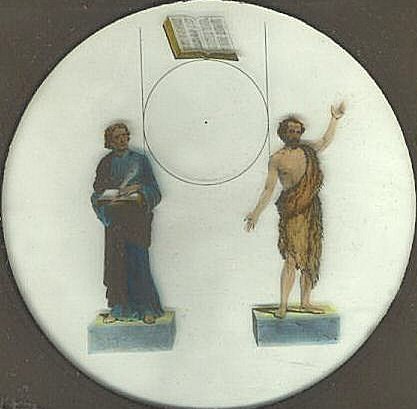
Our degrees teach us to be a certain point within a circle. This shows us the due bounds drawn by the compasses. On one side of the circle is St. John the Baptist and on the other is St. John the Evangelist. These two saints represent two radical sides of Christianity (innovation and tradition). We, as masons, are taught to stand in the center as the point. Masonry is about balance, not radicalism. Balance breeds understanding and tolerance. Radicalism breeds hate and division.


I hope that the brothers on both sides of this argument can see the positive benefits of balance. May brotherly love prevail and ever moral and social virtue cement us.

Monday, October 15, 2007

The Masonic Spectacle...


For the candidate, masonic ritual is new and exciting, filled with wonders and thought-provoking allegories. For the newly initiated brother, seeing a degree on the sidelines gives them a different view of the experiences they just undertook and allows them to reflect on these important principles. For the masonic officer, performing in masonic ritual is exhilarating and allows them to discover the lessons that teaching can only bestow. But what about our other brothers? Sitting on the sideline for degree after degree can grow stale and placid. This lack of excitement can quickly lead to lack of interest, which will yield a lack of attendance.

Any brother who has been active for more than five years and says that he has never been bored by masonic ritual is lying to himself. This point of boredom may occur long before the five year mark, I stated, depending on the activity of the lodge, but it will most likely occur.

Now, I don't want brothers to get angry with me. I can hear it now. "Masonic ritual is the greatest thing in the world. No one can ever get bored of it!!!" Come on! Let's be real here. If the portrayal masonic ritual was always extremely exciting, why do most lodges only have a 10% active retention rate? Why do so many brothers seek further light in the apendent bodies, so quickly? Why don’t brothers volunteer in droves to perform in degree work?

The answer is our brothers are bored. Many of our brothers have seen dozens or hundreds of portrayals of the exact same degree, performed in the exact same way and with the exact same level of enthusiasm. This is the killer of our fraternity, boredom! But how do we fight boredom? Simple, change how we do ritual!

Once again, I can hear the screams of our brothers, “Masonic ritual is sacrosanct, we can’t change anything. It has always been done this way and must always be the done this way!!!!” Hogwash! First of all, I’m not suggesting an all out change to the ritual, I’m suggesting we change how we do ritual and to expand the ritual. There is a huge difference. Hamlet has been performed in thousands of different ways, but it’s still Hamlet. Second, Masonic Ritual is not sacred. It was not handed to us by God, that is a claim for religions. Masonic ritual was made by man and therefore can be changed by man. As long as we stay within the rules and regulations of our Grand Lodges, changes can be made. Finally, Masonic Ritual has been a dynamic organism over its several century development. The rituals performed for Washington, Pike, Kipling and Garbaldi were all very different. Ritual from one country will be different than the ritual in another country. Diversity is one of our greatest strengths.

Now, prepare for some Masonic Heresy. Masonic Ritual is like sex! Sex is great and wonderful. When it’s new, it’s exciting. But it can grow stale, if you do it the same way every time. Talk to any long term married couple and you’ll discover that sex can grow boring, even for people who love each other very much. So what do they do? Marriage Councilors and Sex Therapists have many suggestions to spice up a sex-life. Some of these suggestions are role-playing, bringing food into the bedroom, special costumes, change of location, different positions and acting excited to foster excitement. I will now prescribe the same solutions to help masonic ritual.

Now, get your mind out of the gutter. There’s no sex in the masonic ritual room (a pun on Chris Rock’s song “There’s no sex in the champagne room.”) All the aforementioned solutions can easily be adapted for masonic usage. Let’s begin:

Role-playing - I have heard too many brothers perform ritual like a robot. There is no emotion, no inflection, no change of tone, no acting. Masonic ritual should be exciting. Don’t be afraid to “ham it up.” I enjoyed acting in High School and now I attempt to add some of that acting to my degree work. You should act the part. When you do degree work, you’re no longer John Smith. You’re the Senior Deacon. So, act like the Senior Deacon. A prime example of this is the second half of the Master Mason Degree. This part is not ceremonial, it is a drama, so we should act dramatically. Add emotion to this section and the newly made Master Mason will surely remember this experience for years to come.

Bringing food into the lodge - The fellowship that occurs before a degree can make a huge difference. This fellowship can be amplified by food. Breaking bread with your brothers creates a type of bond that is truly unique and this feeling will only help the bonding occurring during the ritual. My lodge has been introducing a large dinner before many of our degrees. The smiles and laughter during this time sets the mood for the work we do upstairs. Also, the food doesn't have to be boring. I have been to too many meatloaf dinners at lodges. Try something interesting, like an international night, where all the brothers bring a dish from their families ethnic background. An Octoberfest dinner can easily be made or Creole food for Mardi Gras.

Special Costumes - The traditional dress for degree in my lodge is tuxes. However, I have attended ritual done in police uniforms, Scottish kilts, ancient builders dress, colonial garb and york rite aprons. There are many other variations of dress that Masonic Ritual can be done in. As long as your Grand Lodge's rules and regulations are followed, be creative! Visually changing the appearance of the ritual can make a world of different to the level of excitement that occurs. Check out Levant Preceptory for an example of interesting costumes for degree work. These brothers dress as original Knights Templar for the Commandary Degrees in the York Rite and I'm sure they have a blas doing it.

Change of Location - Lodges don't have to meet in lodge rooms! With dispensation, lodges can change locations. This opens the doors for a wide range of options. A lodge in Moosup, CT has a Quarry Degree, where the brothers hold their degree in an operative masonic rock quarry. My lodge over the past weekend, held an Outdoor Master Mason Degree. This simple change of location energized my lodge brothers in a way that I had not previously seen. Everyone had a wonderful time and we hope to make it an annual event. Joint degrees can also be held with a neighboring lodge, so your lodge can visit another lodge in their building. A change of place can yield a change of mind.

Different Positions - Many lodges have "Step-up Nights", where all the line officers step up to the next chair in the line. This gives these brothers a chance to experience what their next years will look like. Many lodges also have Past Masters' Nights, where the Past Masters of the lodge perform all the degree work. There are also Purple Apron Degrees, where all the positions in the lodge are filled by Present and Past Grand Lodge Officers. A lodge in my area has an EA degree called the Kiddie Corner, where the newly raised brothers of the lodge perform the degree. Degrees don't have to be done by just the officers of the lodge, everyone can get active.

Another change of position is what degree work is done. In my jurisdiction, we have many extended lectures that can be performed. The first lecture I learned in my lodge is the extended apron lecture. I throughly enjoyed learning a piece of lecture that added to the degree work of the lodge and my brothers enjoyed hearing it. There are many other additional lectures that can be learned, such as "The Bridge Builder" poem, the extended Middle Chamber lecture, charges from other jurisdictions, the Beehive lecture and many, many more. Another change to a lecture is the Walking Stewards lecture, where the brothers who perform the Stewards lecture, act out the responses to the questions being asked. This is a great way to recap the entire degree in short form. Once again, make sure that the rules and regulations of your Grand Lodge are checked before making these changes.

Acting excited to foster excitement - This is the most important change that can be made to Masonic Ritual. Act Excited! If you want people to enjoy themselves, enjoy it yourself and show it. Excitement is contagious. Always stay positive if you want to get other brothers involved. Don't speech negatively about other people's degree work or lack of participation. Guilt and talking behind someone's back will only yield resentment. Negativity will only sour the pot. One of the most important roles for a Masonic Lodge Officer is to be a cheerleader.

One of the draws of Masonic Ritual is seeing something new and interesting. A spectacle can be defined as " Something that can be seen or viewed, especially something of a remarkable or impressive nature." So make your degree work into a spectacle. Make it remarkable and impressive. Once this is done, you brothers will naturally want to attend more meetings.

These are the things that I have seen to make masonic ritual more exciting, but there are many other ways. I would love to hear what other brothers have done to make their degree work more interesting :)

Sunday, October 14, 2007

Birds of a Feather

Worshipful Brother Tim Bryce posted a great article on using recent internet technologies to form online discussion groups and networking for masons. Check out the post here.

The website this article is hosted on is also a huge wealth of masonic knowledge, so I would also suggest checking out www.freemasoninformation.com.

Friday, October 5, 2007

Actions speak louder then words


This is a post that a lodge brother and old friend sent me about what he feels is important in masonry. Brother Tom has a huge heart and uses it often. There is a difference between being a mason and living masonry. Brother Tom does both. I would suggest we contemplate his words the next time we're arguing over minutes or wasting time on bills. Masonry should be about what masons do, not what masons say.

"One of the things that I would change about Freemasonry is our level of community involvement. All to often, it seems like when a brother first enters the Fraternity there is a lot of talk about how we give so much money away. Now I’m not disputing this, but I think as a whole each lodge should and could do more. For example what’s to stop each state from having an annual or monthly soup kitchen run. We could assign certain members of each lodge to donate their time once a month for a period of 4 hours to help run a soup kitchen. We could do things like this and many other activities. For example it’s not just donating money that allows “Masons to help make men better ” Time is also a valuable asset. Many of us can donate time at the Shiner’s hospitals by just reading, educating and entertaining the kids that are in the hospital. I would gladly be willing to put more of my time doing something like, rather then waiting in lodge to hear the minutes read. There is also a lot of preparatory work that can be done on nights where we have meetings.

In our lodge we have an event called breakfast with Santa for the kids. Every year there are two of our lodge members slaving away the night before wrapping present for hours? Why? Why not have the whole lodge help out after the Stated Communication and wrap a couple of presents. Our members are there why not put them to work. We could help organize a phone-athon wherein we call other masons and family members to see if they would donate money for one of the many walk-athons. We could act on behalf of companies such as Habitat for Humanity, UNICEF, or even help our own circle of brothers, like the Shiners Hospitals. We should be calling up big fortune 500 companies and small ones and getting them to donate time, money or both.


When you ask people about community service many say they would love to perform some but often never follow through with it for two reasons. One of the reason is people have never been shown the harsh reality that some people experience, such as elders eating cat food because it’s cheaper. Second, people are a bit intimidated by the fact that they don’t know how they can help. Just imagine for a minute if we could change our lodge dues to also include 12 hours of community service every year. That is just one hour a month. The lodge I currently belong to has 110 members that are dues-paying members. So if those 110 members did 12 hours of service each, that would leave you with 33 weeks of 40-hour community service workweeks. We also share the same building with another lodge. If we teamed up, it would amount to over one year of 40-hour community service workweeks. It’s one thing to say, “making good men better”; and another thing to see it put in action.


I understand that we must have ritual work and stated communications. I’m not disputing that. But I would much rather put some energy and effort into feeling as if I’m making a difference in the community rather then have to sit and listen to minutes read and people arguing over insignificant details.


What really bothers me is that we say we are so great and that we do all these great things. We do give a lot to in comparison to most. However, I think on the local level there are a ton of things that we can do with very little change. But it all starts with our ability to put these plans in actions rather then sit and rant about minutes from the last meeting.


My lodge’s Fellowcraft Club has a game night about once every other month. What’s to stop us from having these game nights at hospices or other community centers where we can interact with our elders? In high school I used to leave school during my study hall just to visit a local elderly care place. I often would be the only visitor some of these people would see for months.


In closing I’m not saying that we should denounce our current system. I just would like it if we did less talking and more action. It shouldn’t take us 30 minutes of arguing to deciding the condiments at a family and friends BBQ. Instead if we should put those 30 minutes to good use. We could spend that time creating something positive and avoid situations were two members are stuck wrapping presents for hours."

Brother Thomas Hardy

So mote it be!


Friday, September 28, 2007

Old School for the New School - Part 2


This is the continuation of the article I posted yesterday focusing on what "Old School" technology and methods are employed in a masonic lodge that work. In the previous post I listed five items of importance of masonry. This items were ritual, dues cards, scholarship, mouth-to-ear learning, and pen and paper. In this post the second half of this list.

I do find the second half of these two part posts to be more difficult than the first. Most of the items that freely come to mind I put into the first post and I have to struggle to find the latter half that I wish to include. However, I do enjoy the road less traveled. For the second half, I need to search and analyze, focus and think, observe and contemplate. Truly a masonic endeavor :)

With no further ado, items six through ten of "Old School for the New School"

  1. Ballot Box - It's a simple system for balloting. There is a box with two sides. One side is filled with uncast votes represented by white balls for yes and black balls for no. The other side is where the vote is cast. Quick and simple. No paper ballots. Voting without a trace. No hanging chads. This is a system that has worked well for centuries and will work well into the future. Although there are problems with the one vote and dismiss system, it is a proven method to keep harmony in the lodge by allowing any brother to vote no and keep a problematic new member from being excepted.
  2. Budget - Budgets seem old fashion in todays world of internet banking, ATMs and credit cards, but this is a wonderful planning tool. By laying out the financial year of a lodge, the organization of the year must also be planned. There are many lodges that don't utilize this tool and should. Budgets are forward-thinking items and should be used to help the Master, Wardens and brothers plan a successful year. The tool can also streamline a stated communication, because budgeted items may not require a vote. Old School productivity at its best.
  3. Visitor Book - Recently, I filled in as Junior Warden for the lodge that hosted the Master Mason degree where I was raised (I was raised at a Blue Lodge Council Meeting in 2000). I hadn't returned to that lodge since I was raised, because its geographically distant and I don't know many of the brothers there. When I recently visited, I went to sign their guest book. After signing it, I opened the book up to Oct 30th, 2000 and there was my name with the initials FC next to it. In that moment the breadth of my masonic journey washed over me. I was instantly aware of how far I had come and how far I still have to travel. It was quite a humbling experience. The visitors book is an important tool for recording benchmarks and realizing your place in time.
  4. Name Badges - Badges! We DO need some stinking badges! I know that lodge brothers should know each other on sight, but it doesn't always happen that way. This is especially true of new brothers and visitors. When I joined my lodge, I didn't know a single person. For the first year, I relied on name badges to learn who everyone was. The lodge should be a welcome place for its brothers. However, being uncomfortable because you don't know someone's name is quite unwelcoming.
  5. Speech- (This may sound like #4, but it is a quite different.) The oldest communication known to man, speech. We can have all the letters, trestleboards, calendars, emails, websites, IMs, notes, etc, but without using speech as a primary tool of communication, all is lost. Digital communication is a great, but meaning is lost in it. Masters need to talk to their officers. Officers need to talk the brethren. Brothers need to talk to non-masons. Disagreements and arguments often arise because brothers don't talk to each other. A brother may feel slighted because the Master did not personally contact him or a brother may be angered because he was not told about an important event. The 30 minutes before and after a stated communication is often far more important than the time spent within lodge, because brothers can freely talk. Most of the arguments I have seen arise in the lodge is because a brother didn't convey his thoughts and feelings or a brother did not listen to another's needs.
Those are my ten Old School technologies and methods for the New School. I know there are many more. Here are a few to come to mind that I didn't expand on; Past Masters, real candles, summonses, log books, tracing boards, lodge libraries, antique furniture, photographies, etc. The moral of the story is if it ain't broke, don't fix it. However, learn to recognize when something is broke. If you feel something in lodge is not part of the core of masonry and it isn't working, change it. But just because it's old doesn't mean that it isn't working. You should be that certain point within a circle. Look to one side and remember the lodges of old. Look to the other side and envision the lodges of tomorrow. But, always remember you stand in the present and that you must balance the old and the new.

Thursday, September 27, 2007

Old School for the New School


I spend a lot of time thinking about how to introduce new technology and methods into the lodge to help with organization and productivity. I tend to beat this drum loudly, because I love masonry and do not wish to see it become obsolete. I will freely admit that there are many individuals out there that are progressive for the sake of being progressive. We all know that guy who has to have the newest gadget and the most shiney technology. I am not one of those individuals. I do not believe that throwing the baby out with the bathwater is a good way to approach a problem. New does not always mean good.

Life is about balance. We, as masons, are taught that we are a point within a circle, which represents guarding our passions from extremism of all forms. To be completely new school means that you do not heed the lessons of the past and are doomed to repeat the mistakes of history. To be completely old school means that you are not open to the new ideas being developed by your contemporaries and that dynamic world we live in will push you to the side. I like to think that as masons we are the best mix of old and new school. We profess an admiration for ancient knowledge and revere the heroes of the past, while looking toward the future and presenting the modern world with the forward-thinking ideals of friendship, morality and brotherly love.

So, what's the point of this post? Because all ideals should be tempered with action, I will write about what old school methods still work in masonic lodges. What old school technologies and methods do we use that still produce positive results? I will now imitate my previous two posts and give a two part list of what I see in the lodge that has been around for awhile and still works.

  1. Ritual - Man has used ritual from time immemorial. Coming of age, holidays, religion, marriage, hunting prayers, rain dances, etc. are all examples of how mankind has used ritual since the dawn of civilization. Masonic ritual is a vast, rich and complex system that changes the mindset of the candidate and instills in him wise and serious truths. Knowledge and wisdom is bestowed in a way that can not be duplicated with a book or a computer. An iPhone or a plasma TV can not reproduce the experience of masonic ritual. It is purely a social situation and is the primary purpose of the lodge. A masonic lodge is there to make masons and masons are made through ritual. It sets us apart from the uninitiated, makes us better men and is totally old school.
  2. Dues Cards - I once heard a young brother in our lodge say, "Why do we need dues cards? Can't we just email the lodge we're going to visit?" That piece of paper is your traveling papers, gifted to you by King Solomon. It represents the lesson of the third degree, where through faith and trustworthiness you have earned your right to travel in foreign lands. It's true that a dues card can be faked, but so can an email, a letter and a phone call. But it's difficult to fake the look of pride a mason has on his face when he hands you his dues card and says "Yes, I'm a traveling man."
  3. Scholarship - The days of independent scholarship and reflection seem so far away for some. With the internet, satellite TV and cell phones, many people have forgotten how to think. Answers can be quickly gained by typing into a search engine, but are the answers you receive correct? Scholarship is about critical thinking, not about finding answers. True knowledge can never be given, it must be searched for and discovered. The halls of masonry are filled with countless texts, drawings and symbols to help the brethren in their search for knowledge. A lodge's most important physical asset is its documentation. Through years of painstaking transcription, masons can learn our history and therefore prepare for our future.
  4. Learning Mouth-to-Ear - A brother can sit at home, by himself and learn our ritual from a blue book. Although he is learning masonic ritual, is he practicing its tenets? Our brotherhood is about being brothers. Learning ritual through your brothers is the best way to learn. Freemasonry is still one of the few places in the world where people can find an oral tradition. Through our oral tradition, we not only learn ritual, we hear stories, learn about triumphs, experience downfalls and gain wisdom that could never be placed into a non-living receptacle like a book or a PDA.
  5. Pen and Paper - I almost never see masons taking notes during a stated communication. However, I do see many brothers forgetting meeting times, missing events and not being prepared for degrees, simply because they forgot. All brothers in the lodge should have a pad of paper and a pen at meetings. Trestleboards are not always correct and don't have all the information you need. Minutes from stated communications are difficult to get between meetings. The mind forgets most of what it hears. It sounds simple, but write down some notes, so that you'll remember it later. It's quick, easy and cheap and it will save on alot of headaches in the future.
Tune in next time for the continuation of this list of Old School for the New School.